

HSE Researchers Assess Creative Industry Losses from Use of GenAI

Speaking at the IPQuorum.Music forum on October 15, Leonid Gokhberg, HSE First Vice Rector, and Daniil Kudrin, an expert at the Centre for Industry and Corporate Projects of HSE ISSEK, presented the findings of the first study in Russia on the economic impact of GenAI on creative professions. The analysis shows that creators’ potential losses could reach one trillion roubles by 2030.
The pace of technological innovation is accelerating every year: while it took the telephone 75 years to 'take over the world,' DeepSeek reached 100 million users in just two weeks. Today, GenAI models are rapidly gaining popularity, enabling users to generate text, video, images, and audio. There are now at least 1,000 AI models on the market designed for creative tasks and capable of competing with human creators.
Experts at HSE ISSEK have developed a unique methodology for quantifying the losses faced by authors and copyright holders as a result of the adoption of AI. The study focuses on 12 creative professions that are most vulnerable to GenAI. For the first time, researchers have estimated the share of generative content in different types of creative work and assessed the income decline experienced by 'traditional' creators who do not use neural networks. Notably, the study deliberately excludes the potential positive effects of AI, such as increased productivity and reduced barriers to entry.
The findings indicate that total income losses for members of creative professions could reach 1 trillion roubles by 2030. Programmers and developers, as well as advertising and marketing specialists, are expected to be hit the hardest. Generative models have brought new players into the creative industries, including both institutional actors—such as IT companies, developers, and digital platforms—and individuals, such as amateur creators. The production and distribution of AI-generated content by these new players pose a serious threat to the revenues of writers, translators, journalists, and composers: according to experts, AI penetration in these professions will exceed 25%.
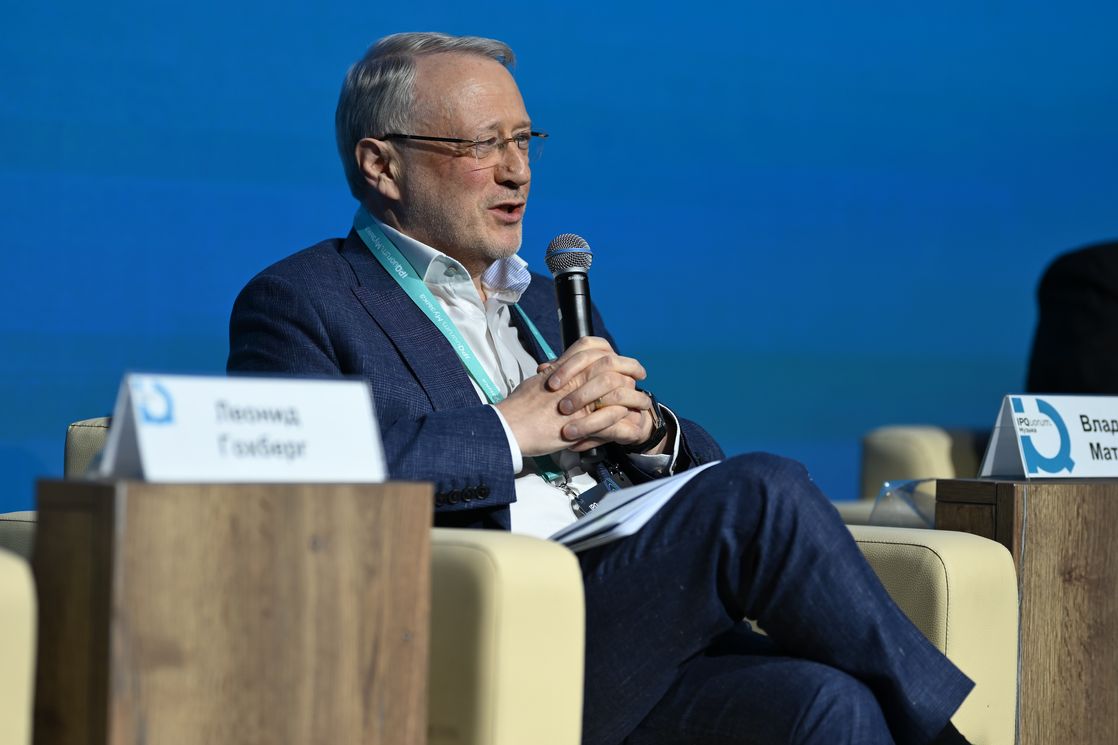
'We live in an era of exponential digital development,' says Leonid Gokhberg, First Vice Rector of HSE University. 'Innovation cannot be stopped, but it is crucial to foster a balanced dialogue between creators, technology companies, and the government. GenAI should not become a threat to creative professions. Rather, it should be viewed as a tool that complements human imagination, not replaces it.'
The researchers emphasise that current AI solutions are still far from fully replacing humans, as generative models are prone to 'hallucinations' and errors, and can pose reputational risks. In practice, AI often serves as an assistant, helping creators with editing, reference selection, translation, and technical problem-solving.
The HSE ISSEK study represents the first step toward a systematic analysis of GenAI’s impact on the intellectual property market and toward developing solutions that balance innovation with the protection of creators’ interests.
A full recording of the plenary session 'Authors in the Service of AI' is available here.
See also:

Scientists Test Asymmetry Between Matter and Antimatter
An international team, including scientists from HSE University, has collected and analysed data from dozens of experiments on charm mixing—the process in which an unstable charm meson oscillates between its particle and antiparticle states. These oscillations were observed only four times per thousand decays, fully consistent with the predictions of the Standard Model. This indicates that no signs of new physics have yet been detected in these processes, and if unknown particles do exist, they are likely too heavy to be observed with current equipment. The paper has been published in Physical Review D.
HSE Scientists Reveal What Drives Public Trust in Science
Researchers at HSE ISSEK have analysed the level of trust in scientific knowledge in Russian society and the factors shaping attitudes and perceptions. It was found that trust in science depends more on everyday experience, social expectations, and the perceived promises of science than on objective knowledge. The article has been published in Universe of Russia.
Institute for Robotics Systems Established at HSE University
As decided by the HSE University Academic Council, a new Institute for Robotics Systems will be established at HSE, and with a strong fundamental base. It will cooperate with relevant departments across the university and engage students and doctoral candidates in research and development (R&D). First Vice Rector of HSE University and Director of the Institute for Statistical Studies and Economics of Knowledge, Leonid Gokhberg, discussed the expected practical results and the framework for cooperation with an industrial partner.
Final of International Yandex–HSE Olympiad in AI and Data Analysis Held at HSE University
Yandex Education and the HSE Faculty of Computer Science have announced the results of the international AIDAO (Artificial Intelligence and Data Analysis Olympiad) competition. Students from 14 countries took part. For the second year in a row, first place went to the team AI Capybara, which developed the most accurate AI model for an autonomous vehicle vision system.
AI Lingua Included in Compilation of Best International AI Practices in Higher Education
HSE University has been acknowledged internationally for its pioneering efforts in integrating artificial intelligence into higher education. The AI Lingua Neural Network developed at HSE was included in the renowned international collection ‘The Global Development of AI-Empowered Higher Education: Beyond the Horizon.’ The compilation was prepared by the Institute of Education (IOE) of Tsinghua University with the support of the Ministry of Education of the People's Republic of China and a global advisory committee, which included experts from Oxford, UCL, Sorbonne, Stanford, and other leading academic centres.
Technological Breakthrough: Research by AI and Digital Science Institute Recognised at AI Journey 2025
Researchers from the AI and Digital Science Institute (part of the HSE Faculty of Computer Science) presented cutting-edge AI studies, noted for their scientific novelty and practical relevance, at the AI Journey 2025 International Conference. A research project by Maxim Rakhuba, Head of the Laboratory for Matrix and Tensor Methods in Machine Learning, received the AI Leaders 2025 award. Aibek Alanov, Head of the Centre of Deep Learning and Bayesian Methods, was among the finalists.
HSE Tops Ranking of Universities Participating in Priority 2030 Programme
The Russian Ministry of Science and Higher Education has published an updated list of participants in the Priority 2030 programme. A total of 106 universities will receive support this year. HSE University was included in the first group and topped the ranking.
HSE Psycholinguists Launch Digital Tool to Spot Dyslexia in Children
Specialists from HSE University's Centre for Language and Brain have introduced LexiMetr, a new digital tool for diagnosing dyslexia in primary school students. This is the first standardised application in Russia that enables fast and reliable assessment of children’s reading skills to identify dyslexia or the risk of developing it. The application is available on the RuStore platform and runs on Android tablets.
HSE University to Join Physical AI Garage Project by Yandex
Yandex is collaborating with leading Russian universities to launch a new educational programme called Physical AI Garage. This initiative unites five universities—HSE University, ITMO, MIPT, MAI, and MEPhI—to train future professionals in physical artificial intelligence by tackling real-world industrial challenges. The programme is free, and participants will receive scholarships.
HSE Scientists Optimise Training of Generative Flow Networks
Researchers at the HSE Faculty of Computer Science have optimised the training method for generative flow neural networks to handle unstructured tasks, which could make the search for new drugs more efficient. The results of their work were presented at ICLR 2025, one of the world’s leading conferences on machine learning. The paper is available at Arxiv.org.