

Neuroscientists Reveal Anna Karenina Principle in Brain's Response to Persuasion
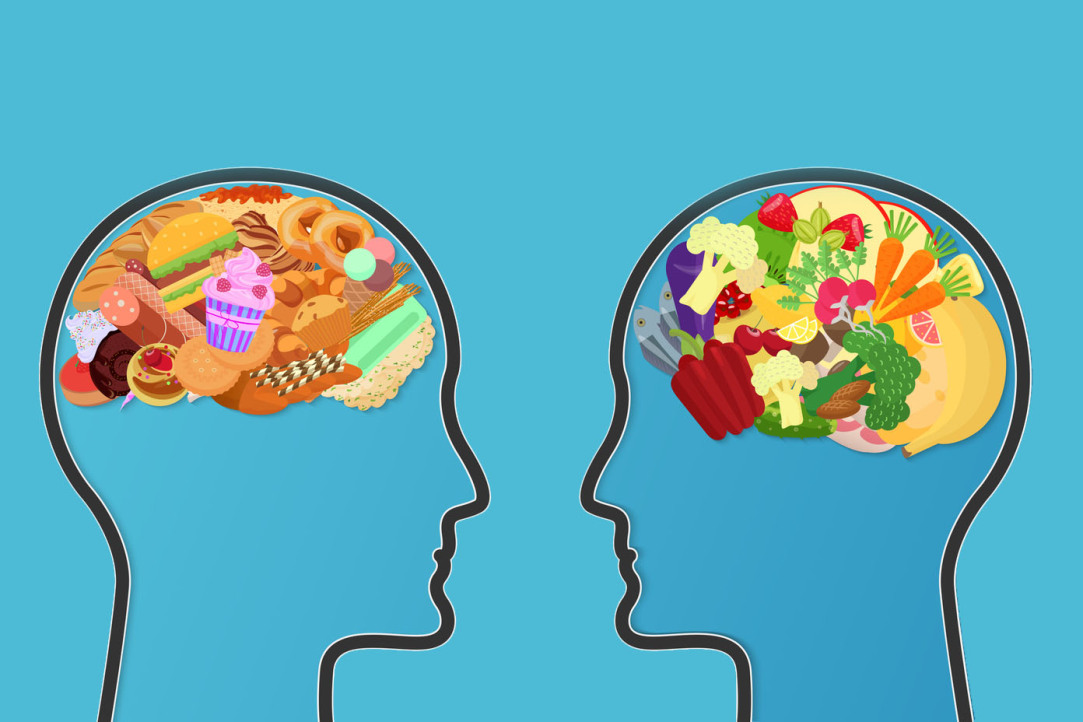
A team of researchers at HSE University investigated the neural mechanisms involved in how the brain processes persuasive messages. Using functional MRI, the researchers recorded how the participants' brains reacted to expert arguments about the harmful health effects of sugar consumption. The findings revealed that all unpersuaded individuals' brains responded to the messages in a similar manner, whereas each persuaded individual produced a unique neural response. This suggests that successful persuasive messages influence opinions in a highly individual manner, appearing to find a unique key to each person's brain. The study findings have been published in PNAS.
Persuading people to adopt a healthier lifestyle can be accomplished through effective argumentation. For several years, researchers at the HSE Institute for Cognitive Neuroscience have been investigating how expert arguments about healthy eating can influence a person's willingness to purchase sugar-free foods, and, most importantly, which areas of the brain are involved.
In a recent study, neuroscientists at HSE University compare the brain responses of individuals who are likely to be persuaded by expert arguments with those who resist persuasion. Unlike traditional research approaches, where participants are exposed to isolated words or phrases, the researchers presented the subjects with an expert's talk on the health risks of sugar consumption. This approach supports a more realistic laboratory simulation of persuasive communication. To obtain a comprehensive and detailed picture of neural activity in different groups of participants, the researchers employed functional magnetic resonance imaging (fMRI). Using the mathematical method of intersubject correlation analysis, the researchers then examined whether the neural responses to the healthy eating call were similar or varied across participants.
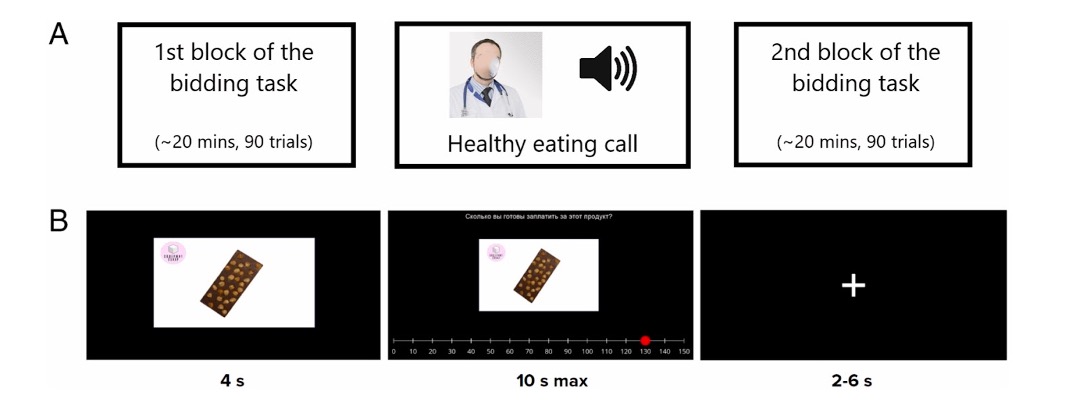
The experiment involved 50 participants and consisted of two parts. First, participants were asked to rate three types of products—sugar-containing, sugar-free, and non-edible—and to place bids on each by indicating how much they would be willing to pay. Next, the participants listened to a 7-minute lecture by an expert on the health risks of sugar consumption, after which they were asked to bid on the same products once again. Throughout the experiment, the researchers monitored the participants' brain activity using fMRI.
As a result of the healthy eating message, some participants changed their minds in favour of a healthier diet. The persuaded group also displayed highly varied patterns of brain activity, in particular a greater diversity of activity in the lower regions of the frontal cortex, an area crucial for decision-making and social cognition.
In contrast, the brains of participants who were sceptical and unpersuaded by the expert's arguments processed the information all in a similar manner. They showed high synchronisation of activity in brain regions linked to self-reflection and critical assessment of information.

'We used an unconventional method to study brain activity: we examined the similarity of neural activity across a group of individuals. In scientific terms, this is referred to as "intersubject correlation of brain activity." Our findings can be described as a type of Anna Karenina effect, where the responses of those who are indifferent and immune to arguments are alike, while each persuaded individual responds in their own unique way. Apparently, an effective persuasive message can adapt to individuals' unique characteristics, targeting aspects that are particularly relevant to each listener,' explains Vasily Klyucharev, Head of the International Laboratory of Social Neurobiology and of this research project.
Interestingly, participants influenced by the expert's talk were willing to pay more for healthy food, but the value they placed on sugar-containing food did not decrease. According to the researchers, this may be due to the structure of the audio message: towards the end, the expert emphasised the benefits of healthy eating rather than the negative effects of sugar consumption. Information that concludes a message is typically remembered best.

Ioannis Ntoumanis
'In the future, we hope to continue studying this "Anna Karenina effect" to identify the reasons behind the differences in neuronal activity among those who are persuaded. Does the effectiveness of persuasive messages depend on the chosen arguments, and what factors exactly influence people? All of this can improve the perception of public health messages, making them more personalised and, as a result, more effective,' according to Ioannis Ntoumanis, Junior Research Fellow at the International Laboratory of Social Neurobiology and co-author of the study.
The study was conducted within the framework of the strategic project 'Human Brain Resilience: Neurocognitive Technologies for Adaptation, Learning, Development and Rehabilitation in a Changing Environment' ('Priority 2030').
See also:

Scientists Test Asymmetry Between Matter and Antimatter
An international team, including scientists from HSE University, has collected and analysed data from dozens of experiments on charm mixing—the process in which an unstable charm meson oscillates between its particle and antiparticle states. These oscillations were observed only four times per thousand decays, fully consistent with the predictions of the Standard Model. This indicates that no signs of new physics have yet been detected in these processes, and if unknown particles do exist, they are likely too heavy to be observed with current equipment. The paper has been published in Physical Review D.
HSE Scientists Reveal What Drives Public Trust in Science
Researchers at HSE ISSEK have analysed the level of trust in scientific knowledge in Russian society and the factors shaping attitudes and perceptions. It was found that trust in science depends more on everyday experience, social expectations, and the perceived promises of science than on objective knowledge. The article has been published in Universe of Russia.
Scientists Uncover Why Consumers Are Reluctant to Pay for Sugar-Free Products
Researchers at the HSE Institute for Cognitive Neuroscience have investigated how 'sugar-free' labelling affects consumers’ willingness to pay for such products. It was found that the label has little impact on the products’ appeal due to a trade-off between sweetness and healthiness: on the one hand, the label can deter consumers by implying an inferior taste, while on the other, it signals potential health benefits. The study findings have been published in Frontiers in Nutrition.
HSE Psycholinguists Launch Digital Tool to Spot Dyslexia in Children
Specialists from HSE University's Centre for Language and Brain have introduced LexiMetr, a new digital tool for diagnosing dyslexia in primary school students. This is the first standardised application in Russia that enables fast and reliable assessment of children’s reading skills to identify dyslexia or the risk of developing it. The application is available on the RuStore platform and runs on Android tablets.
HSE Scientists Optimise Training of Generative Flow Networks
Researchers at the HSE Faculty of Computer Science have optimised the training method for generative flow neural networks to handle unstructured tasks, which could make the search for new drugs more efficient. The results of their work were presented at ICLR 2025, one of the world’s leading conferences on machine learning. The paper is available at Arxiv.org.
Physicists Propose New Mechanism to Enhance Superconductivity with 'Quantum Glue'
A team of researchers, including scientists from HSE MIEM, has demonstrated that defects in a material can enhance, rather than hinder, superconductivity. This occurs through interaction between defective and cleaner regions, which creates a 'quantum glue'—a uniform component that binds distinct superconducting regions into a single network. Calculations confirm that this mechanism could aid in developing superconductors that operate at higher temperatures. The study has been published in Communications Physics.
Neural Network Trained to Predict Crises in Russian Stock Market
Economists from HSE University have developed a neural network model that can predict the onset of a short-term stock market crisis with over 83% accuracy, one day in advance. The model performs well even on complex, imbalanced data and incorporates not only economic indicators but also investor sentiment. The paper by Tamara Teplova, Maksim Fayzulin, and Aleksei Kurkin from the Centre for Financial Research and Data Analytics at the HSE Faculty of Economic Sciences has been published in Socio-Economic Planning Sciences.
Larger Groups of Students Use AI More Effectively in Learning
Researchers at the Institute of Education and the Faculty of Economic Sciences at HSE University have studied what factors determine the success of student group projects when they are completed with the help of artificial intelligence (AI). Their findings suggest that, in addition to the knowledge level of the team members, the size of the group also plays a significant role—the larger it is, the more efficient the process becomes. The study was published in Innovations in Education and Teaching International.
New Models for Studying Diseases: From Petri Dishes to Organs-on-a-Chip
Biologists from HSE University, in collaboration with researchers from the Kulakov National Medical Research Centre for Obstetrics, Gynecology, and Perinatology, have used advanced microfluidic technologies to study preeclampsia—one of the most dangerous pregnancy complications, posing serious risks to the life and health of both mother and child. In a paper published in BioChip Journal, the researchers review modern cellular models—including advanced placenta-on-a-chip technologies—that offer deeper insights into the mechanisms of the disorder and support the development of effective treatments.
Using Two Cryptocurrencies Enhances Volatility Forecasting
Researchers from the HSE Faculty of Economic Sciences have found that Bitcoin price volatility can be effectively predicted using Ethereum, the second-most popular cryptocurrency. Incorporating Ethereum into a predictive model reduces the forecast error to 23%, outperforming neural networks and other complex algorithms. The article has been published in Applied Econometrics.